Episode 34
How Links Golf Courses Are Designed: Bunkers, Greens and Strategy Explained
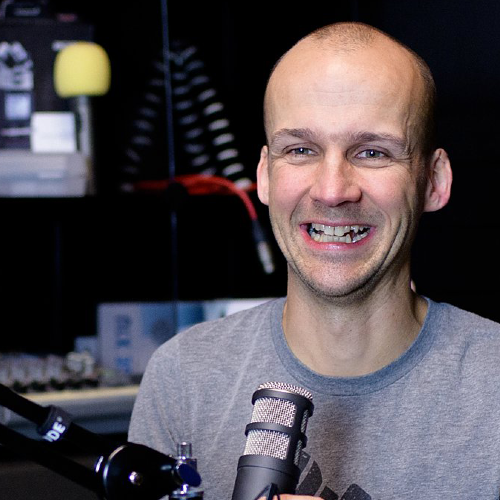
This week Colin swaps Ross for a guest he's known his entire life: his dad. Duncan Gray started out as a greenkeeper at Gatehouse of Fleet, spent years at Lahinch, ran the Ayrshire municipal courses, then moved into designing and consulting on courses before building his own, the Pines Golf Centre in Dumfries. He's also been playing for 65 years, which is roughly 60 more than Colin has been any use at it. The pair landed a round on the Jubilee Course at St Andrews through The Drive ballot. It turned out to be the one course on the Old Course site Duncan had never played, so they sat down afterwards with a recorder.
What follows is a 23 handicapper asking a course designer all the questions he's been storing up. Why do some greens feel brilliant before you've even hit the shot? How does an architect walk a bit of dune land and find the holes already hiding in it? Why does Royal Dornoch have upside-down pudding bowls for greens, what did Prestwick look like with 12 holes, and what did the Turnberry redesign get right? Duncan has opinions on all of it, including a lively one about bulldozers, fertiliser and a certain school of golf course construction. There's also the small matter of playing Turnberry once a month in the 80s for nothing.
Then it's on to ranking the St Andrews courses for fun, difficulty, looks and architecture, with a verdict on whether the Old Course is actually any good or just old. Along the way there's a bunker that turns out to be three times bigger than it looks, a pod of 50 dolphins off the point at Turnberry, and 65 years of playing partners summed up in one sentence. There are no competitions this week and no Ross, who will be back next time to restore order.
Episode Highlights
🟢 The funnel bunker: Colin thinks he's hit a perfect 280 yard drive and only escapes the sand by about a foot. Duncan explains why links designers shape the ground so a 20 foot bunker plays like a 50 foot one, and why the fix was the club in Colin's hand.
🟢 How a designer reads a site: Duncan walks the land first and notes the natural green sites before drawing anything. He uses the Jubilee's drivable par four, with its green cut into the side of a dune, to show what that looks like when it works.
🟢 Turnberry for free: monthly rounds in the 80s with course manager George Brown, a course so quiet they had it to themselves at five in the afternoon, and the changes the group agreed it needed decades before anyone made them.
🟢 "The most boring two holes in world golf": Colin on the 1st and 18th of the Old Course, why Duncan would still pick it for fun over any of the others, and which part of that famous finish he reckons was dug out by hand.
🟢 The dolphins: a flat calm evening at Turnberry with the sun going down over Arran, and four greenkeepers standing still for ten minutes. It's Duncan's case for why golf is about more than the score.
Gear & Resources Mentioned
🟢 St Andrews Links, Jubilee Course. It opened in 1897, was rebuilt by Donald Steel in 1988, and the starter called it the hardest of the lot: https://standrews.com/play/courses/jubilee-course
🟢 The Drive, the St Andrews Links Trust ballot offering heavily discounted tee times to golfers living in Scotland. Details are announced through St Andrews Links: https://standrews.com
🟢 The Old Course ballot, for anyone wanting to try their luck the traditional way: https://standrews.com/old-course-ballot
🟢 The other St Andrews Links courses discussed: the Old, New, Eden, Strathtyrum and Castle, plus the former Duke's, which the Links Trust took over in January 2026 and is renaming the Craigtoun Course.
🟢 Royal Dornoch Golf Club, home of the upside-down pudding bowl greens: https://www.royaldornoch.com
🟢 Prestwick Golf Club, which recreates Old Tom Morris's original 12-hole Open layout each autumn: https://www.prestwickgc.co.uk
🟢 Western Gailes Golf Club, one of Duncan's favourites to play: https://westerngailes.com
🟢 Trump Turnberry, Ailsa Course. It's Duncan's favourite course, and was redesigned in 2016 by Martin Ebert of Mackenzie and Ebert, with a new par three 9th by the lighthouse, a par five 10th and an 11th across the bay: https://www.turnberry.co.uk
🟢 Lahinch Golf Club in County Clare, where Duncan worked for several years: https://lahinchgolf.com
🟢 Carnoustie Golf Links, scene of Jean van de Velde's 1999 collapse, in the Open Paul Lawrie went on to win: https://www.carnoustiegolflinks.com
🟢 Open history mentioned: the 1977 Duel in the Sun between Tom Watson and Jack Nicklaus at Turnberry, and Costantino Rocca holing out of the Valley of Sin at St Andrews in 1995 to force a playoff with John Daly.
🟢 Coastal links name-checked for proper sea views: Golspie, Brora, Nairn, Moray Golf Club at Lossiemouth, Prestwick St Nicholas and Royal Troon.
🟢 Walter Hagen, the actual source of the "smell the flowers along the way" line.
Chapter List
00:00 Intro: meet Duncan Gray
03:08 First time on the Jubilee Course
05:06 Framed greens and the par four you shouldn't hit driver on
07:57 How a course designer walks a site
13:11 Royal Dornoch's upside-down pudding bowls
15:28 Prestwick's original 12 holes
17:28 Turnberry: Duncan's favourite, and what the redesign fixed
20:53 Free golf at Turnberry and the Duel in the Sun
24:15 Is the Old Course actually any good?
25:48 Bulldozers, fertiliser and sustainable greenkeeping
32:15 Ranking the St Andrews courses for fun
37:42 The hardest course and the funnel bunker
43:11 Do looks matter? Smelling the roses
45:21 65 years of playing partners
47:46 Links courses that never see the sea
51:45 Fifty dolphins at Turnberry
52:35 Best architecture, the Castle Course and the one he'd play every day